




-
- Tweet
CartItem(0)ProductProducts Item(0)
No products
Free shipping! Shipping
$0.00Total
Product successfully added to your shopping cart
Quantity
Total
There are 0 items in your cart.There is 1 item in your cart.
Total products (tax excl.)
Total shipping (tax excl.) Free shipping!
Total (tax excl.)
- Email Us contact@dezignlover.com
- WhatsApp : +1(832) 844 1221
The Designer Lounge Chair: How to Choose the Perfect Armchair for Your Home
On : dimanche, août 16, 2026

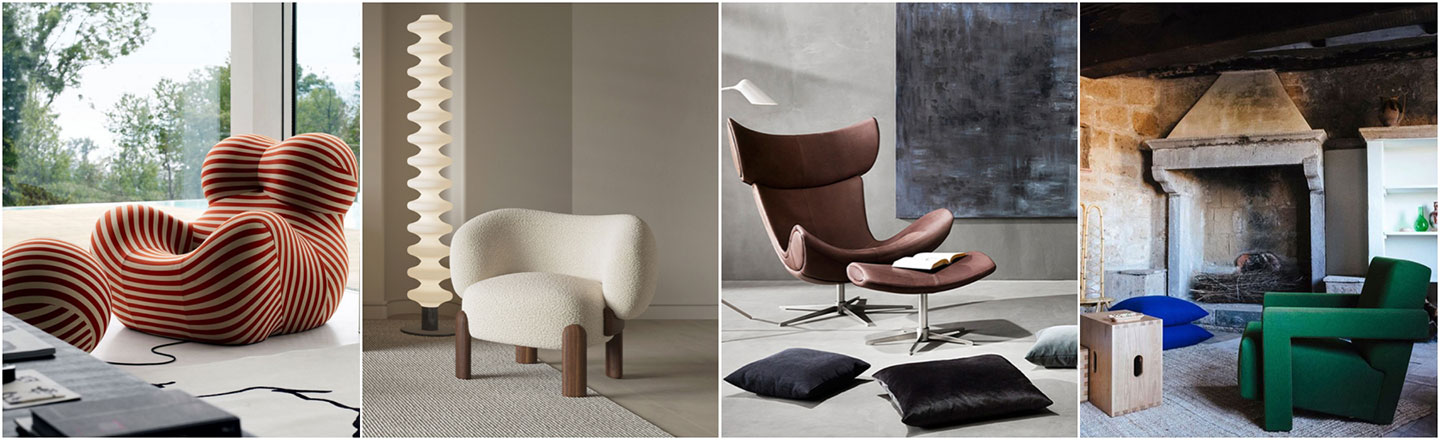
There are very few pieces of furniture that carry as much weight - visually, emotionally, and historically - as the lounge chair. It is the piece that defines a corner, anchors a living room, and says something specific about the person who chose it. A truly great lounge chair is not simply somewhere to sit. It is a statement of taste, a commitment to craft, and often the most personal object in a home.
In 2026, the designer lounge chair is having a genuine cultural moment. After years in which sofas dominated living room conversations, the armchair is reclaiming its position as the true hero piece of the interior - the object around which everything else is arranged. Whether you are drawn to the clean lines of mid-century modernism, the organic forms of contemporary design, or the industrial edge of vintage-inspired pieces, there has never been a better time to invest in a lounge chair that genuinely speaks to you.
This guide walks you through everything you need to know to choose the perfect designer lounge chair for your home - from understanding the design movements that have shaped the most iconic chairs in history, to the practical decisions around proportion, placement, and fabric that will determine whether your chair looks extraordinary or merely adequate.
Why a Designer Lounge Chair is One of the Most Important Investments You Can Make
New Folder/image 1-1.png)
Before getting into the specifics of how to choose, it is worth establishing why a designer lounge chair deserves serious investment. The answer is more nuanced than simple quality - although quality is certainly part of it.
A great lounge chair occupies a unique position in the interior hierarchy. Unlike a sofa, which is a shared piece, a lounge chair is inherently personal. It belongs to one person, one reading ritual, one corner of the house. It carries a kind of intimacy that no other piece of furniture does. The person who chooses a Platner Lounge Chair is making a very different statement about themselves than the person who chooses an Eames chair - and both are making a statement that no sofa can make with the same clarity.
Beyond the personal dimension, a designer lounge chair is also one of the most permanent fixtures in a room. Upholstery can be reupholstered. Cushions can be replaced. But the fundamental form of a great chair - its silhouette, its proportions, its structural logic - will remain constant for decades. This permanence is exactly why it is worth getting right, and worth investing in quality when you do.
Finally, a designer lounge chair is one of those pieces where the quality difference between a genuine article and an imitation is most dramatically apparent. The curve of a bent plywood seat, the tension of a leather sling, the geometry of a wire-welded base - these things cannot be faked at a lower price point. The chair either has it or it does not. Invest well once and the piece will give you joy for a lifetime.
The Design Movements That Shaped the Modern Lounge Chair
New Folder/Image 2.png)
To choose a lounge chair with genuine knowledge and confidence, it helps to understand the major design movements that have given us the most celebrated armchair silhouettes. These movements are not merely historical footnotes - they are living influences that continue to define what a great lounge chair looks and feels like today.
Mid-Century Modernism (1945-1969)
The mid-century modern movement produced more iconic lounge chairs than any other period in design history. Designers working in the post-war years were animated by a genuine utopian impulse: the belief that good design could improve everyday life, and that beautiful objects should be accessible to everyone.
The defining characteristics of mid-century modern lounge chairs are clean lines, organic forms that follow the shape of the human body, and an embrace of new materials - bent plywood, fibreglass, wire rod, cast aluminium. The chairs produced in this period feel simultaneously simple and sophisticated: they look as if they could not have been designed any other way, and yet they are the result of intense experimentation and technical innovation.
The Platner Lounge Chair, designed by Warren Platner in 1966, is one of the defining examples of this movement. Its base is created by welding hundreds of curved steel rods to circular and semi-circular frames, creating a structure that simultaneously serves as support and ornament. The result is a chair that looks almost impossibly delicate from a distance but is in fact remarkably robust - and one that continues to feel completely contemporary more than fifty years after it was designed.
Organic and Sculptural Design (1960s-Present)
Running parallel to the cleaner geometries of mid-century modernism, a separate tradition of more overtly sculptural and organic chair design has produced some of the most visually extraordinary pieces in the history of furniture.
This tradition is defined by chairs that seem to defy conventional furniture logic - chairs that look more like sculptures than seats, that challenge the distinction between art and design, that create genuinely unexpected experiences when you encounter them in a room.
The Etcetera Easy Chair, originally designed by Swedish designer Jan Ekselius in the 1970s, belongs to this tradition. Its remarkable silhouette - fluid, generous, deeply comfortable - feels both entirely of its moment and entirely contemporary. It is the kind of chair that stops people mid-sentence when they walk into a room, not because it is aggressive or challenging, but because it is simply beautiful in a way that rewards prolonged looking.
Industrial and Vintage Design
A third tradition in lounge chair design draws inspiration from industrial materials and processes, creating pieces that feel robust, characterful, and deeply connected to the history of making. Industrial-inspired chairs tend to celebrate the materials from which they are made - exposed rivet details, hand-finished metal, visible structural elements - rather than concealing them behind smooth surfaces.
The Spitfire Swivel Easy Chair exemplifies this sensibility. Combining aviation-inspired styling with vintage character, it features a hand-finished aluminum shell with exposed rivet details and a comfortable upholstered seat. The combination of industrial material and considered comfort creates a chair with enormous personality - a piece that clearly has a history and a point of view, and that brings both into any room it occupies.
How to Choose the Right Lounge Chair for Your Space
New Folder/3.png)
Understanding design movements gives you a vocabulary and a frame of reference. But choosing the specific lounge chair for your specific home requires a more practical set of decisions.
Proportion and Scale
The single most important practical consideration when choosing a lounge chair is proportion. A chair that is wrong in scale for the room it sits in will look wrong regardless of how beautiful it is in isolation, and a chair that is right in scale can make a room feel perfectly composed even if nothing else is quite right.
As a general guide, a lounge chair should feel generous without overwhelming its immediate surroundings. If the chair is sitting in a corner reading nook, it should fill the corner without crowding it. If it is positioned as a pair flanking a coffee table, each chair should feel balanced against the sofa or room beyond rather than competing with it.
Pay particular attention to seat height. Standard lounge chair seat heights range from around 40 to 45 centimetres, and the right height for your chair depends partly on your own physical proportions and partly on what other furniture it will sit alongside. A very low seat height creates a relaxed, informal feel; a higher seat height is more formal and easier to get in and out of.
Upholstery and Material
The material of a lounge chair determines not only how it looks but how it wears, how it feels, and what kind of atmosphere it creates in a room. The main options each have distinct characteristics.
Leather is the most durable upholstery option and the one that ages most beautifully. Full-grain leather develops a patina over time that makes the chair look more beautiful the older it gets. It is cool in summer and warm in winter, and it is easier to clean than fabric. The trade-off is cost - genuine full-grain leather is expensive - and initial stiffness, which softens considerably with use.
Fabric offers the widest range of colours, patterns, and textures, and in the right material can create a chair that feels extraordinarily inviting. Boucle - the chunky, looped fabric that has dominated interior design for the past several years - gives lounge chairs a soft, tactile quality that makes them irresistible to touch. Linen and linen-blend fabrics have a natural, relaxed quality that works beautifully in warm-toned interiors. Velvet adds richness and depth.
Cowhide occupies a unique position: natural, durable, and with a visual character - each hide is unique in its pattern of colours - that no synthetic material can replicate. The Barcelona Cowhide Daybed exemplifies this material at its most refined: natural cowhide with its own distinct colours and patterns, combined with a solid wood frame to create something that feels genuinely one-of-a-kind.
Metal and wire - as seen in the Platner Chair's steel rod construction - offer a visual lightness that fabric and leather cannot. A wire or metal-based chair seems to float in a room, taking up visual space without blocking it.
Placement and Context
Where a lounge chair sits in a room is as important as the chair itself. The most common placement errors are positioning the chair in isolation (creating a piece that looks like it has been left behind rather than deliberately placed) and placing it too close to the sofa (creating a crowded, incoherent seating arrangement).
The most effective placements treat the lounge chair as a distinct zone within the room. A chair with a floor lamp beside it and a small side table within reach creates a reading corner that has its own logic and identity - a space within the space. This approach gives the room a sense of programmatic richness: different areas for different activities, each with their own atmosphere and equipment.
In open-plan living spaces, a pair of lounge chairs at an angle to the sofa creates a conversation area that feels both connected to and distinct from the main seating. The chairs act as a hinge point between different areas of the space - living, dining, kitchen - and give the open plan a sense of structure that it can otherwise lack.
The Role of the Lounge Chair in Contemporary Interior Design
In 2026, the lounge chair is being used in ways that would have seemed unexpected even a decade ago. Designers and homeowners are placing statement armchairs in rooms where they have traditionally been absent - in bedrooms as reading chairs, in home offices as thinking spaces, in dining rooms as host chairs at the head of the table, even in bathrooms where a single extraordinary chair transforms a purely functional space into something approaching a private spa.
This expansion into new territory reflects a broader shift in how we think about interior design: away from rigid room typologies and toward a more fluid, personal approach in which every space in the home deserves the same level of design attention. A beautifully chosen lounge chair in a bedroom says something different about how you live than the same room without one - it says that you value moments of stillness, that you have given thought to how you want to spend time in the room, that you have made space for contemplation alongside the more obvious function of sleep.
The lounge chair is also increasingly being used as the primary statement piece in rooms that might otherwise lack a clear design anchor. Where previous generations might have invested in a statement sofa, today's most considered interiors often feature a more modest sofa paired with one or two extraordinary lounge chairs. This approach gives the room more visual dynamism - different silhouettes, different materials, different heights - and allows for a more genuinely personal expression of taste.
Caring for Your Designer Lounge Chair
A designer lounge chair is an investment that will last decades if properly cared for. The specifics of care depend on the material.
For leather chairs, regular treatment with a quality leather conditioner prevents the material from drying out and cracking. Avoid direct sunlight, which bleaches and dries leather over time, and clean spills immediately with a soft, damp cloth. Full-grain leather that is properly maintained will develop a beautiful patina that adds to its character rather than diminishing it.
For fabric chairs, professional cleaning every two to three years maintains the freshness of the upholstery and extends its life considerably. Between professional cleans, a lint roller and a soft brush kept nearby make it easy to maintain the chair's appearance day to day. Rotate cushions where possible to distribute wear evenly.
For metal-based chairs - particularly wire and rod constructions - occasional polishing maintains the finish and prevents oxidation. Check joints and welds periodically; a reputable designer chair will have joints that are immensely strong, but it is good practice to check for any movement or loosening over time.
Styling Your Lounge Chair: The Details That Make the Difference
New Folder/4.png)
The chair itself is the foundation, but the details around it determine whether it becomes the genuinely extraordinary corner of the room that it has the potential to be.
A floor lamp is non-negotiable. A lounge chair without a light source beside it is a seat that invites you to sit but not to stay. A sculptural floor lamp positioned just behind and beside the chair creates the right reading light while adding a vertical element that gives the corner a sense of completeness. The lamp's style should complement the chair - a sleek, architectural lamp beside a mid-century chair; something more organic and sculptural beside a contemporary piece.
A side table within arm's reach. Whether it is a simple round table at the right height, a pair of nesting tables, or something more sculptural and unusual, a surface beside the lounge chair completes the reading or relaxation ritual. It needs to hold a drink, a book, and perhaps a small plant or candle - nothing more is required.
A throw or cushion adds lived-in warmth. A lounge chair in perfect condition, with nothing on or near it, looks showroom-ready rather than inhabited. A throw casually draped over one arm, or a single cushion in a complementary fabric, softens the chair and makes it look like it belongs to someone rather than to a catalogue.
A small rug defines the zone. If the lounge chair is creating its own corner within the room, a small rug placed beneath and in front of it - even a modest sheepskin or a simple geometric pattern - defines the territory and gives the corner a sense of completion.
Final Thoughts
The designer lounge chair is one of those rare objects that operates simultaneously as furniture, sculpture, and personal statement. Choose well, and it will be the piece in your home that people notice first, remember longest, and want most to understand - because a great chair, like a great work of art, always raises the question of the person who chose it.
At Dezignlover, our collection of designer lounge chairs and armchairs spans the full range of design traditions - from the sculptural elegance of the Platner Lounge Chair to the organic comfort of the Etcetera Easy Chair and the industrial character of the Spitfire Swivel. Every piece has been chosen for its design integrity, its material quality, and its capacity to make the rooms it inhabits more beautiful.

© 2012 - 2026 Dezignlover. All Rights Reserved.