


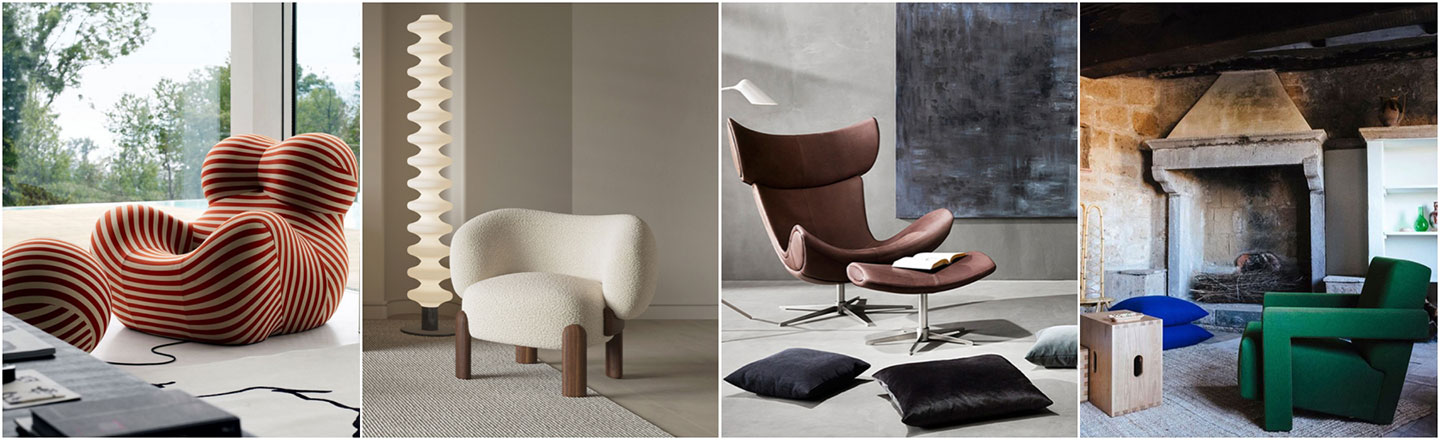


-
- Tweet
CartItem(0)ProductProducts Item(0)
No products
Free shipping! Shipping
$0.00Total
Product successfully added to your shopping cart
Quantity
Total
There are 0 items in your cart.There is 1 item in your cart.
Total products (tax excl.)
Total shipping (tax excl.) Free shipping!
Total (tax excl.)
- Email Us contact@dezignlover.com
- WhatsApp : +1(832) 844 1221
How to Style a Small Living Room Like a Designer (2026 Guide)
On : mardi, juillet 21, 2026

Small living rooms are one of the most common design challenges homeowners face. Whether you live in a city apartment, a compact townhouse, or simply have a living room that never quite feels big enough, the struggle is real: how do you create a space that feels generous, beautiful, and deliberately designed when you are working with limited square footage?
The answer, as professional designers know, is not about making a room look bigger through tricks and illusions. It is about making it feel right - cohesive, intentional, and perfectly suited to the way you actually live. A small living room styled with confidence and skill will always feel more impressive than a large room that has been decorated without thought.
This guide gives you the exact strategies that interior designers use to transform compact living rooms into spaces that feel extraordinary. Every tip here has been chosen with one goal in mind: helping you create a small living room that genuinely stops people in their tracks.
Why Small Living Rooms Fail (And How to Avoid the Most Common Mistakes)
/ChatGPT Image Jul 21, 2026, 09_57_57 PM.png)
Before getting into what to do, it helps to understand what most people get wrong. The most common mistakes in small living rooms are surprisingly consistent.
Furniture that is too small. This is counterintuitive, but it is one of the most frequent errors designers encounter. People assume that small rooms need small furniture - tiny sofas, delicate side tables, narrow coffee tables. In reality, a room full of small-scale furniture looks cluttered and uncertain. One well-proportioned, generous sofa anchors a small room far more effectively than three small pieces competing for attention.
Too many pieces. Overcrowding is the enemy of any small room. Every additional piece of furniture in a compact space reduces the breathing room and makes the room feel more confined. Designers are ruthless about editing: only what is genuinely needed and genuinely beautiful earns its place.
Wrong lighting. Relying on a single overhead light flattens a small room and makes it feel smaller. Layered lighting - multiple light sources at different heights - creates depth, warmth, and the illusion of a more expansive space.
Ignoring vertical space. Small rooms rarely have expansive floor plans, but they almost always have walls. Using vertical space effectively - through tall shelving, high-hung curtains, and wall-mounted lighting - draws the eye upward and makes a room feel taller and more generous.
Playing it too safe with colour. Many people assume that small rooms must be white or very pale to feel larger. This is partially true, but a small room painted in a rich, deep tone can actually feel more intimate and curated than a white box. The key is knowing when to go light and when to go bold.
1. Choose One Hero Piece and Build Around It
/3 (2).png)
Every beautifully designed small living room has a focal point - one piece that commands attention and sets the tone for everything else. In a small space, trying to have multiple statement pieces creates visual noise and makes the room feel chaotic. The designer's approach is to choose one hero and let everything else support it.
Your hero piece might be a sofa in a beautiful fabric, a sculptural coffee table, an extraordinary pendant lamp, or a piece of art. Whatever it is, it should be the thing you love most in the room - the piece that makes you happy every time you see it.
Once you have identified your hero piece, the editing process becomes much easier. Every other element in the room is evaluated against a simple question: does this support and complement the hero, or does it compete with it? Pieces that compete get removed or replaced. Pieces that complement stay.
This approach also gives a small room a sense of intention and curation that is immediately apparent to anyone who walks in. A room with a clear focal point feels designed; a room without one feels assembled.
2. Invest in a Sofa That Fits Properly
/03.png)
The sofa is almost always the largest piece of furniture in a living room, and in a small space, getting it right is critical. The most important factor is not style or colour - it is proportion.
A sofa that is too large will overwhelm the room and block traffic flow. A sofa that is too small will look lost and make the room feel uncertain. The sweet spot is a sofa that fills roughly two-thirds of the main wall it sits against, leaving enough space on either side to feel balanced without feeling cramped.
In terms of style, low-profile sofas work particularly well in small living rooms. A sofa with a lower back and arms sits visually lighter in a space, allowing more of the wall behind it to remain visible and making the room feel more open. Avoid sofas with very high backs or heavy, bulky arms that visually dominate the space.
Leg height also matters. A sofa raised on legs - even just a few centimetres off the floor - allows light to pass underneath and creates a sense of visual lightness that a sofa sitting directly on the floor cannot achieve.
For fabric, consider lighter tones for the sofa itself if the room is genuinely very small. A sofa in a warm off-white, soft camel, or pale linen will reflect light and help the room feel more open. Then introduce colour and depth through cushions, throws, and accessories that can be changed easily.
3. Use a Single Large Rug Rather Than Multiple Small Ones
/04.png)
One of the most impactful decisions you can make in a small living room is the size and placement of your rug. Designers almost universally recommend one large rug rather than multiple smaller ones in a compact space, and the reason is simple: a large rug unifies the seating area and makes the floor plane read as a single cohesive surface, which makes the room feel larger.
The rug should be large enough for at least the front legs of all the main seating pieces to sit on it. This connects the furniture visually and defines the living area as a distinct zone - particularly important in open-plan spaces where the living room flows into a kitchen or dining area.
In terms of pattern, large-scale geometric or abstract patterns can actually work well in small rooms - they give the eye something interesting to engage with and draw attention to the floor rather than the walls, which helps the room feel more spacious. Very busy, multi-colour patterns tend to make small rooms feel cluttered.
Lighter rug colours will make the floor feel more expansive; darker colours will add depth and intimacy. Both approaches can work beautifully depending on the overall tone you want the room to have.
4. Layer Your Lighting for Depth and Warmth
/05.png)
Nothing transforms a small living room more dramatically than getting the lighting right. A single overhead light is the enemy of atmosphere - it produces flat, uniform illumination that makes a small room feel like a waiting room. Designers always layer lighting, and in a small room, this layering is especially important.
Start with your ambient light source - a beautiful pendant lamp or a ceiling fixture that provides general illumination. In a small living room, a statement pendant lamp hung slightly lower than you might expect draws the eye upward and becomes a genuine design feature while providing warm, diffused light.
Add a floor lamp in one corner of the room. A sculptural floor lamp with a diffusing shade creates a pool of warm light that makes the corner feel inhabited and adds depth to the room. It also provides excellent reading light without the visual bulk of a large table lamp.
Place small table lamps on side tables or shelving to add further layers of light at lower levels. The combination of light sources at different heights - ceiling, standing, table - creates a sense of layered depth that makes even the smallest room feel more expansive and inviting.
Wall lamps are particularly valuable in small living rooms because they provide light without occupying any floor space. A pair of wall-mounted lamps flanking a mirror or a piece of art adds both functional light and a decorative layer that gives the room architectural interest.
Fit all your light sources with dimmer switches wherever possible. The ability to adjust the intensity of light in a small room gives you enormous control over its atmosphere - bright and open during the day, warm and intimate in the evening.
5. Use Mirrors Strategically
/06.png)
Mirrors are one of the most powerful tools in a designer's toolkit for small spaces, but they need to be used strategically rather than reflexively. Simply placing a large mirror on every available wall does not make a room feel bigger - it makes it feel like a hall of mirrors.
The most effective use of mirrors in a small living room is to place a single large mirror on the wall opposite or adjacent to the main window. This reflects natural light back into the room and creates the impression of a second window or opening - one of the most effective ways to make a small room feel more spacious.
The frame of the mirror matters as much as its size. A beautifully framed mirror - ornate and gilded for a more traditional space, simple and sculptural for a contemporary one - functions as a piece of art and adds to the room's design rather than simply acting as a spatial trick.
Avoid placing mirrors where they reflect unattractive views - the back of a sofa, a cluttered corner, a blank wall. Mirrors amplify whatever they reflect, so position them to reflect the most beautiful parts of your room: natural light, a plant, a piece of art, the most attractive furniture grouping.
6. Go Vertical with Storage and Display
/07.png)
In a small living room, floor space is precious. The solution is to think vertically - to use the full height of the walls for storage and display rather than clustering everything at floor level.
Tall, slim bookshelves that reach close to the ceiling draw the eye upward and make the room feel taller. They also provide generous storage and display space without significantly expanding the room's footprint. Style them with a mix of books, plants, ceramics, and objects rather than filling them uniformly with books alone - the variety creates visual interest and makes the shelving feel curated rather than purely functional.
Floating shelves are another excellent option for small living rooms. They provide display space without the visual weight of floor-standing furniture, and positioned correctly - at different heights and in asymmetric arrangements - they add character and personality to walls that would otherwise be blank.
Wall-mounted lighting, as mentioned earlier, is another way to exploit vertical space. A wall lamp that would have required a side table and a table lamp in a larger room can perform the same function while freeing up valuable floor space in a small one.
7. Keep the Colour Palette Cohesive
/08.png)
In a small living room, a cohesive colour palette is more important than in a larger space. When a room is compact, visual clutter - which includes colour clutter - feels more overwhelming. A palette of three or four related tones, used consistently across walls, upholstery, and accessories, creates the sense of a unified, considered space.
This does not mean the room needs to be monochrome or boring. Within a cohesive palette, there is enormous room for variation in tone, texture, and material. A living room with warm sand walls, a linen sofa in a slightly darker camel, cushions in terracotta and deep rust, and a wooden coffee table with brass details is using a narrow palette but creating rich, layered warmth.
The key is to limit the number of distinct colour families in the room. Two or three is ideal; four or more starts to feel busy and unresolved in a small space. Pick your palette deliberately, test it in the room's specific light conditions, and commit to it.
If you want to introduce a bold accent colour - a deep forest green, a rich burgundy, a vibrant ochre - use it in one or two places only. A pair of cushions, a single armchair, a vase on a shelf. Enough to give the room energy and personality without overwhelming a compact space.
8. Choose Furniture with Double Duty
/09_1.png)
In a small living room, every piece of furniture should ideally serve more than one purpose. A coffee table with storage underneath, an ottoman that doubles as extra seating, a side table that also functions as a bedside table when needed - these double-duty pieces reduce the total number of items in the room while maintaining or even increasing its functionality.
Nesting tables are a particularly clever solution for small living rooms. They take up the space of a single table when nested together but can expand to provide multiple surfaces when needed for entertaining. Folding chairs stored elsewhere in the home but brought in when guests arrive follow the same principle.
Storage ottomans deserve special mention. A large, well-chosen ottoman in front of a sofa can function simultaneously as a coffee table (with a tray on top), additional seating for guests, and a storage solution for throws, cushions, or other living room items. In a small room, this kind of versatility is invaluable.
9. Edit Ruthlessly and Regularly
/010.png)
Perhaps the most important piece of advice for styling a small living room like a designer is also the simplest: edit ruthlessly and do it regularly. Designers are not sentimental about objects that are not earning their place. If something does not contribute to the room's beauty or function, it goes.
In a small living room, every object is visible and every object matters. A cluttered side table, an unnecessary chair, a pile of books with no designated home - each of these small accumulations adds to a sense of disorder that makes the room feel smaller and more stressful.
Establish a rule for yourself: for every new object that comes into the room, one must leave. This simple discipline keeps the room from gradually accumulating the kind of low-level clutter that slowly erodes the atmosphere of even the most beautifully designed space.
Seasonal editing is also valuable. Every few months, look at the room with fresh eyes. What feels tired or out of place? What has stopped earning its position? What could be replaced with something that brings you more joy or serves the room better? This regular reassessment keeps the room feeling alive and considered rather than static and overlooked.
10. Add Personality Through Plants and Accessories
/11.png)
The final layer of any well-styled small living room is personality - the objects, plants, and accessories that make the space feel genuinely inhabited rather than staged. In a small room, this layer needs to be applied with a light touch, but it should absolutely be there.
One or two generous plants make an enormous difference in a compact living room. A large fiddle-leaf fig in a corner, a trailing plant on a shelf, or a collection of smaller plants grouped together on a side table all add life, colour, and an organic quality that no furniture or lighting can replicate.
A small collection of ceramics - three or five pieces in related tones and materials, grouped together on a shelf or a coffee table - creates a moment of beauty that gives the room character. Odd numbers work better than even for decorative groupings; they feel more natural and less deliberately arranged.
A single piece of art, well-chosen and well-hung, can anchor the entire personality of a small living room. It does not need to be large - in fact, a medium-sized piece hung at exactly the right height often works better in a compact space than an oversized canvas that overwhelms. The art should feel personal: something that genuinely moves you, not something chosen purely because it matches the sofa.
Final Thoughts
Styling a small living room like a designer is not about applying a checklist of tricks. It is about approaching the space with intention, editing with confidence, and choosing every element with care. A small living room styled this way does not feel small - it feels curated, personal, and alive.
The fundamental principle is simple: do less, but do it better. Choose fewer pieces, but choose them with genuine care. Invest in quality over quantity. Edit regularly and without sentiment. The result will be a living room that feels not just beautiful, but genuinely extraordinary - regardless of its size.
Explore our full collection of designer lighting, sculptural furniture, and premium home accessories at Dezignlover.com - every piece is chosen to help you create a home that feels intentional, warm, and uniquely yours.

© 2012 - 2026 Dezignlover. All Rights Reserved.