




-
- Tweet
CartItem(0)ProductProducts Item(0)
No products
Free shipping! Shipping
$0.00Total
Product successfully added to your shopping cart
Quantity
Total
There are 0 items in your cart.There is 1 item in your cart.
Total products (tax excl.)
Total shipping (tax excl.) Free shipping!
Total (tax excl.)
- Email Us contact@dezignlover.com
- WhatsApp : +1(832) 844 1221
LCW Chair by Eames | Iconic Comfort & Mid-Century Design
On : dimanche, janvier 18, 2026

Charles and Ray Eames made history when they introduced their legendary Low Chair Wood (LCW chair) as an iconic piece of furniture made with molding plywood - an increasingly popular material during this century.
Plywood curves around your body to provide an ergonomic fit, while showing the layers of wood as an eye-catching design element.
Comfort
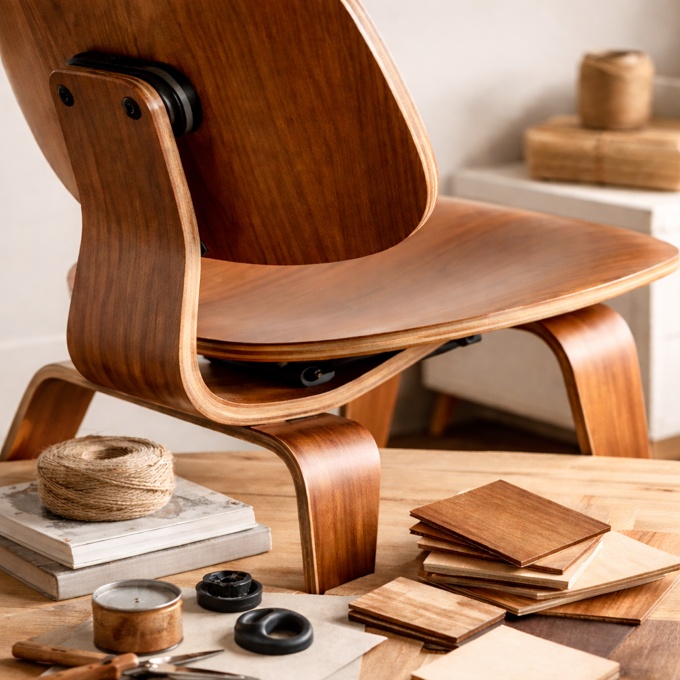
The LCW Lounge Chair is the epitome of comfort and aesthetic appeal, boasting minimalist lines to offer organic flow that follow the natural curves of human bodies for optimal relaxation and support. Crafted of molded plywood for durability and sophistication while featuring visible layers for depth perception as well as rubber shock mounts for flexibility - this piece makes an excellent addition to casual as well as formal living spaces alike.
Charles and Ray Eames developed the design for the LCW chair after World War II when they conducted experiments molding plywood with inexpensive techniques for mass production, using this work as part of the postwar Good Design movement to explore modern furniture design possibilities and set an influential precedent. Their work remains influential today among designers.
In 1940, Charles and Henry submitted a range of organically designed chairs into the Museum of Modern Art's Organic Furniture Competition and won. Due to America's participation in WWII however, production had to cease immediately; Charles continued experimenting with plywood shapes until developing technology for what eventually became the LCW chair, manufactured first by Evans Molded Plywood then Herman Miller after 1949.
Design
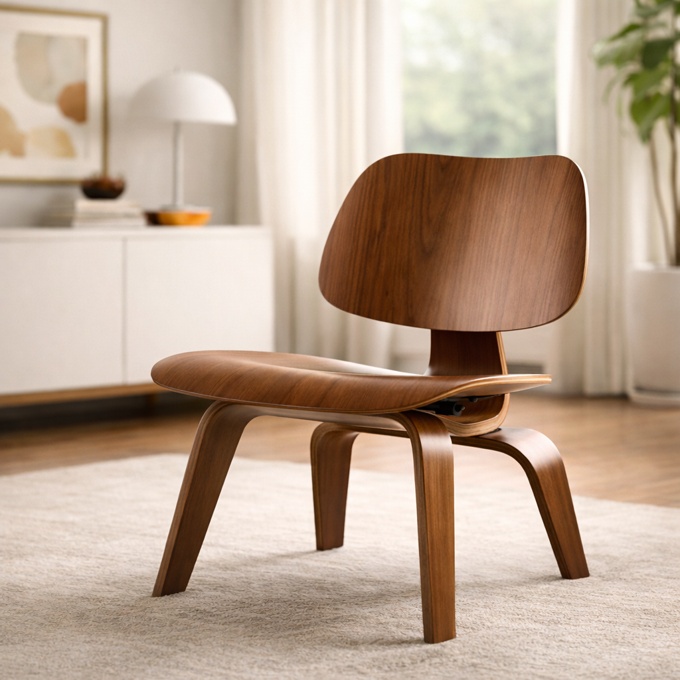
The LCW Chair's ergonomic shape fits snugly against you for the optimal experience, while its natural wood finish adds timeless and elegant style. A timeless classic from 1940s design, this timeless piece can also be found in lounges and offices.
Charles and Ray Eames experimented with plywood molding during World War II, adapting their Navy research on leg splints to produce inexpensive chairs using new technologies. Their aim was to produce inexpensive seating using new techniques; their goal was achieved when they successfully formed plywood into three planes to produce organic shapes with softly curving surfaces.
Initial attempts at creating a single-shell design failed due to plywood being too soft. Instead, their LCW (short for Lounge Chair Wood) chairs feature separate seats and backs made out of lightweight veneer sandwiched between five sheets; additionally the spine and legs use 8-layer plywood for additional strength.
Since its groundbreaking construction is so exemplary, the LCW has become an iconic piece of mid-century modern design that continues to revolutionize furniture industry today. Its lasting appeal exemplifies Herman Miller's creativity and human insight in their designs; this piece serves as a reminder of their focus on quality, authenticity and innovation.
Materials
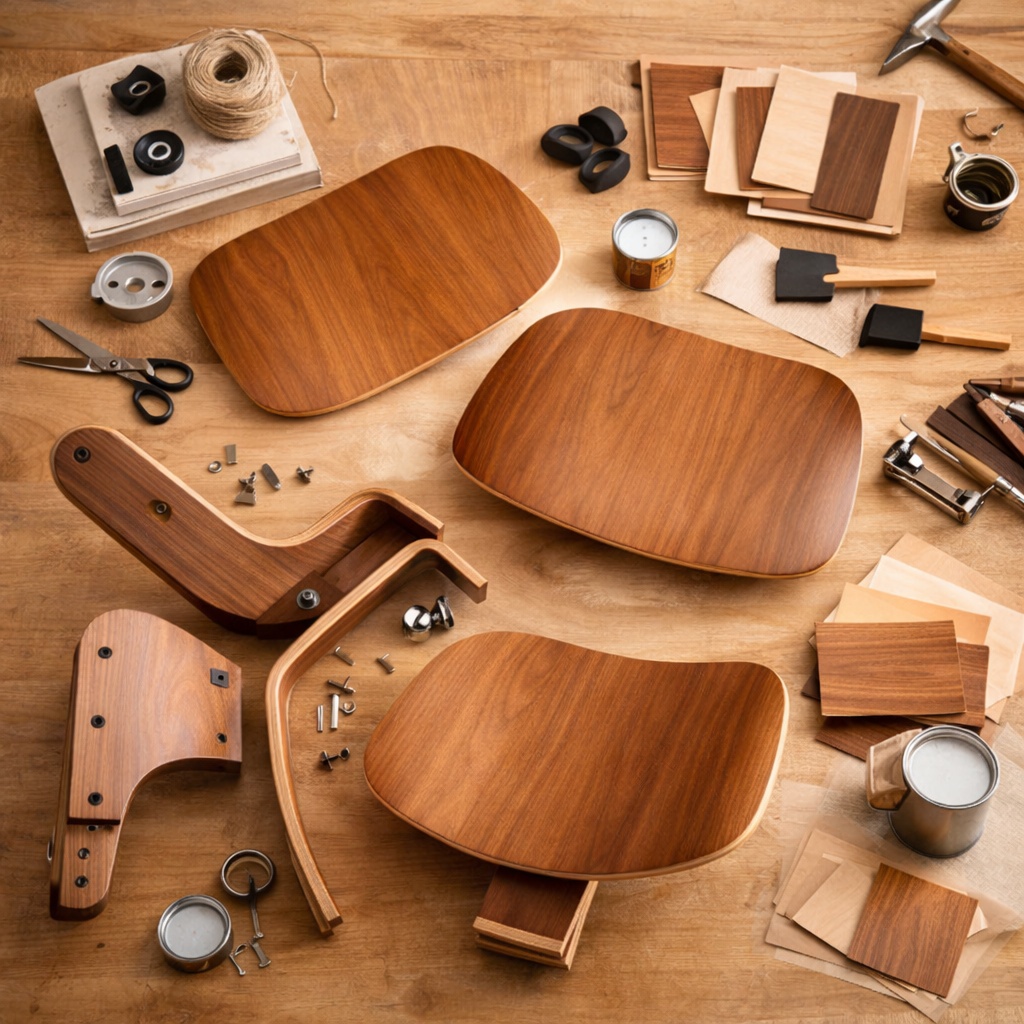
After numerous experiments with molded plywood Charles and Ray Eames designed this lounge chair in 1945/46. Unlike their earlier bentwood designs which were more anthropomorphic in form, this one is functional: the curved plywood conforms to the body to provide an enjoyable seating experience while its playful yet sophisticated form creates a comfortable seating experience. Visible layers of lightweight wood veneers create depth and texture while showing how the chair was constructed; rubber shock mounts adhered instead of screwed to its seat and back allow for flexibility and respond to changes in movement caused by its users.
The LCW Chair exemplifies Eames' philosophy of using honest materials. They sought to make furniture using wood in the most economical manner, using techniques they learned while making leg splints for the Navy during World War II and producing designs without needing upholstery.
The LCW is comprised of five moulded plywood elements joined together. It features U-shaped 7-ply legs joined to a curved "spine" through rubber shock mounts kept largely out of sight, using rubber shock mounts kept largely out of view; mahogany outer plies cover these, while the remaining plies are comprised of birch. Heat and pressure were used during shaping processes that gave its seat and back its unique shapes.
History
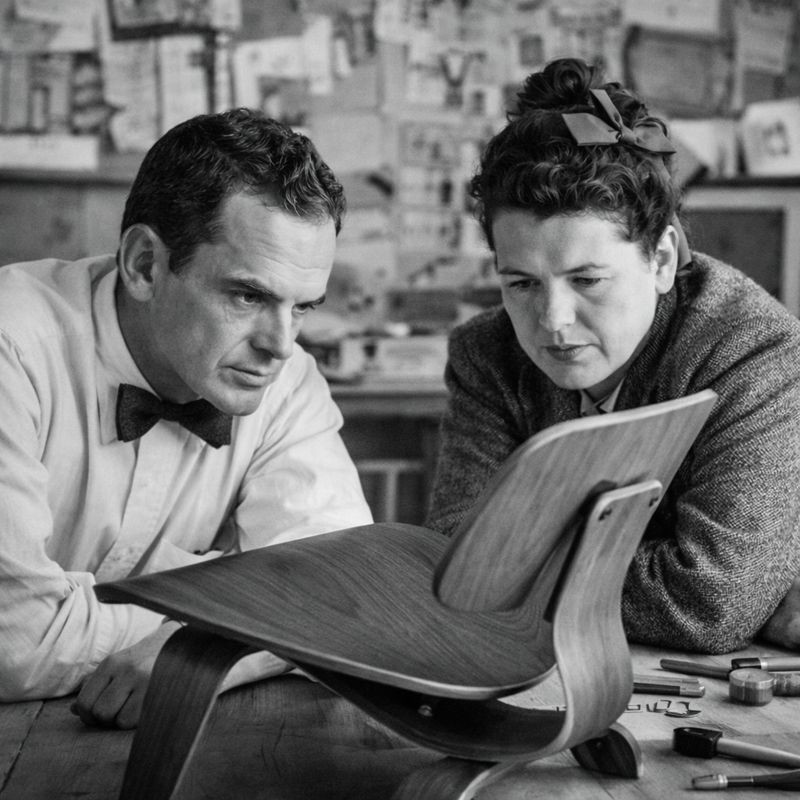
Charles and Ray Eames, commonly known as The Eames, were two of the most acclaimed designers of postwar Good Design movement of 1950s. Their designs not only looked incredible but were functional as well, using materials which seemed current enough to have been manufactured recently.
The LCW Chair was one of Herman Miller's early successes and continues to be manufactured today. This plywood lounge chair first manufactured by Evans Molded Plywood prior to being distributed by Herman Miller beginning distribution operations in 1947.
Charles and Ray created this lounge chair as part of their experimentation with molded plywood at that time. Their initial design was submitted for entry into an international competition hosted by MOMA called Organic Design in Home Furnishings but production was halted due to America entering WWII. But their experiments with plywood designs and molding techniques continued, leading them to receive contracts with both Navy and Air Force to develop splints and stretchers using compound curves.
The LCW chair was first unveiled as part of a Museum of Modern Art exhibition in 1946 and features five separate curved forms interconnected by five forms connected by 8-layer plywood spine and legs for extra strength. Its back rest and seat pan were constructed from lightweight veneer sheets with hardwood inner plies while 8-layer plywood provided strength throughout its body

© 2012 - 2026 Dezignlover. All Rights Reserved.