


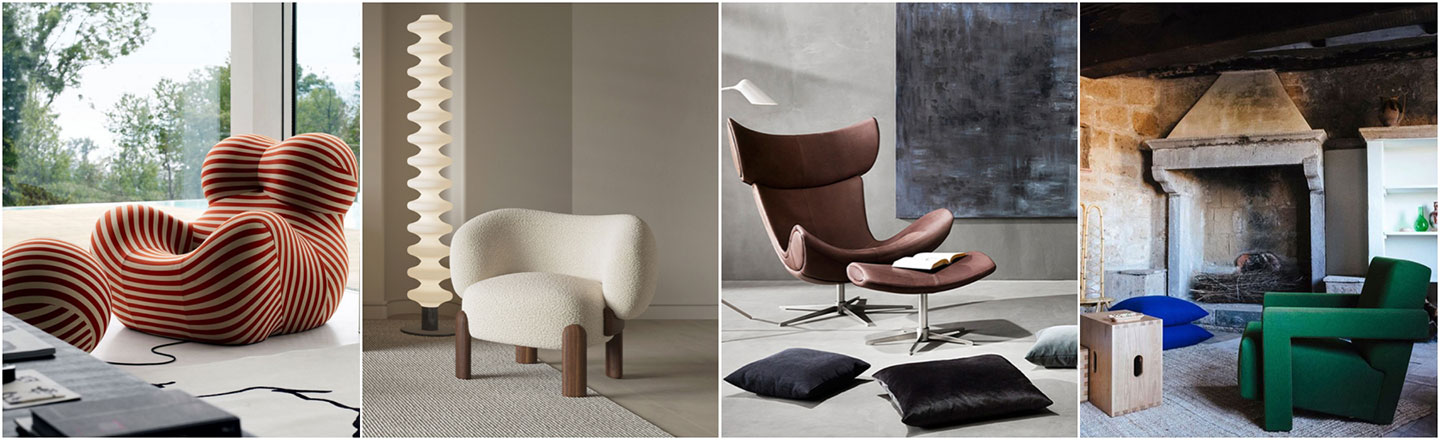


-
- Tweet
CartItem(0)ProductProducts Item(0)
No products
Free shipping! Shipping
$0.00Total
Product successfully added to your shopping cart
Quantity
Total
There are 0 items in your cart.There is 1 item in your cart.
Total products (tax excl.)
Total shipping (tax excl.) Free shipping!
Total (tax excl.)
- Email Us contact@dezignlover.com
- WhatsApp : +1(832) 844 1221
10 Interior Design Trends That Will Define Beautiful Homes in 2026
On : dimanche, juin 28, 2026

Every year, the world of interior design shifts - new materials emerge, old aesthetics get reinvented, and the way we think about our living spaces evolves. But 2026 is not just another year of subtle tweaks. It marks a genuine turning point in how we design homes: a move away from cold, minimal interiors toward spaces that feel warm, personal, layered, and deeply human.
Whether you are planning a full renovation or simply looking to refresh a room, understanding the trends shaping interiors right now will help you make smarter, more confident design decisions. Here are the ten trends that are defining beautiful homes in 2026 - and how to bring each one into your own space.
Warm Minimalism: Less Cold, More Soul
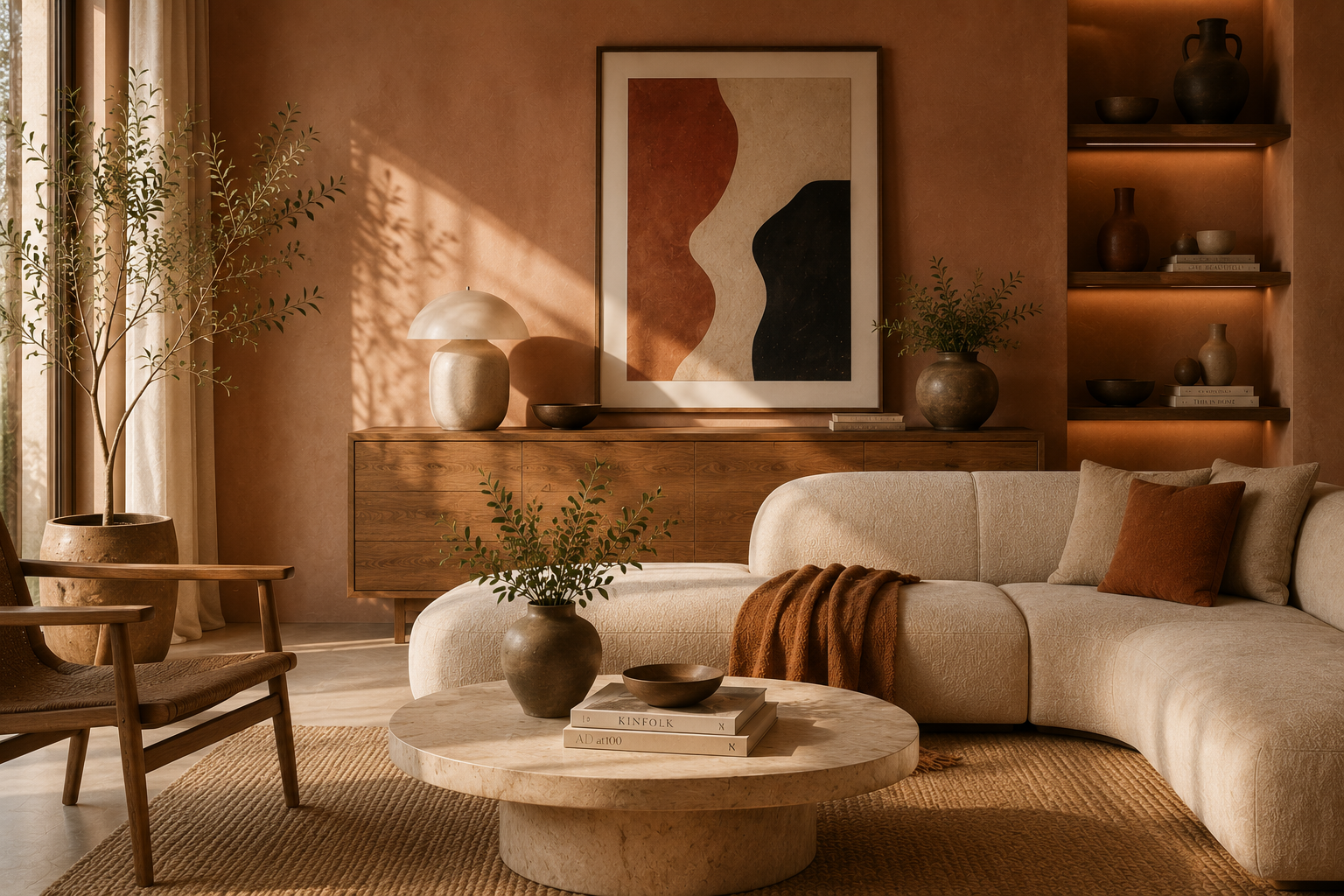
Minimalism is not dead - it has simply grown up. The stark, all-white, everything-hidden minimalism of the 2010s has given way to something far more liveable: warm minimalism. This approach keeps the clean lines and uncluttered spaces that minimalism is known for, but replaces cold greys and stark whites with earthy tones, natural textures, and carefully chosen statement pieces.
Think walls in warm sand, terracotta, or deep ochre. Think furniture with visible grain, natural linen upholstery, and ceramic accessories with an organic, hand-made quality. The philosophy is restraint with warmth - every object in the room earns its place, but nothing feels clinical or unwelcoming.
To bring warm minimalism into your home, start by auditing what you already have. Remove anything that does not serve a functional or genuine aesthetic purpose, then layer back in warmth through texture: a linen throw, a jute rug, a wooden side table with visible knots and grain. Let the materials do the talking.
Sculptural Furniture as Art
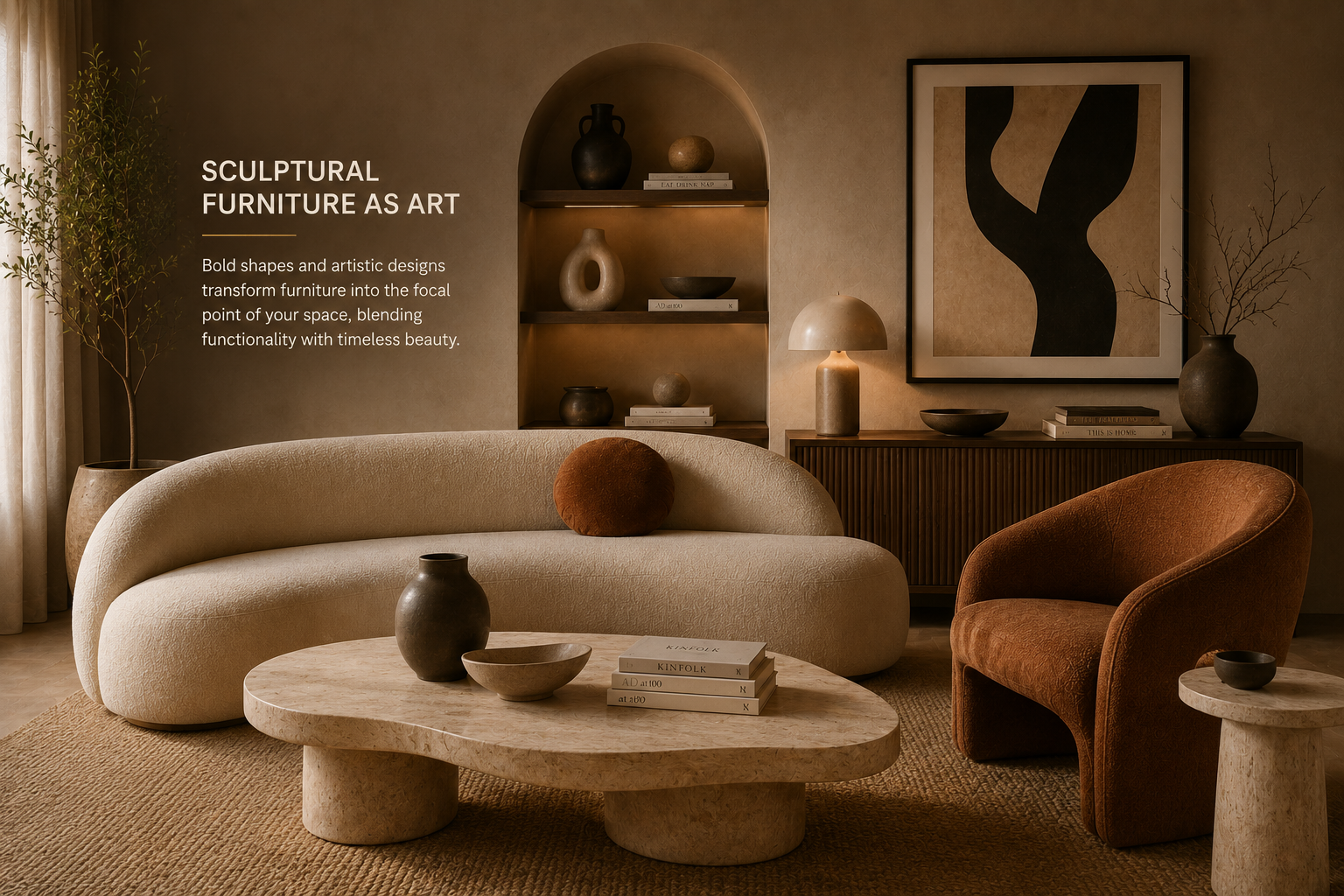
In 2026, furniture is no longer just functional - it is the art. The trend for sculptural, statement furniture pieces has accelerated dramatically, driven by a growing appetite for interiors that feel curated and original rather than assembled from a catalogue.
A sculptural armchair with an unexpected silhouette, a coffee table that looks like it was carved from a single block of stone, a sideboard with legs that seem almost architectural - these are the pieces that define a room and make it memorable. They are conversation starters that reveal something about the person who chose them.
The key to working sculptural furniture successfully is restraint. One or two genuinely statement pieces in a room are powerful; a room full of competing shapes becomes chaotic. Choose your hero piece first - perhaps a striking sofa or an extraordinary dining table - then build the rest of the room around it with quieter, more understated elements.
Natural Stone Surfaces Everywhere
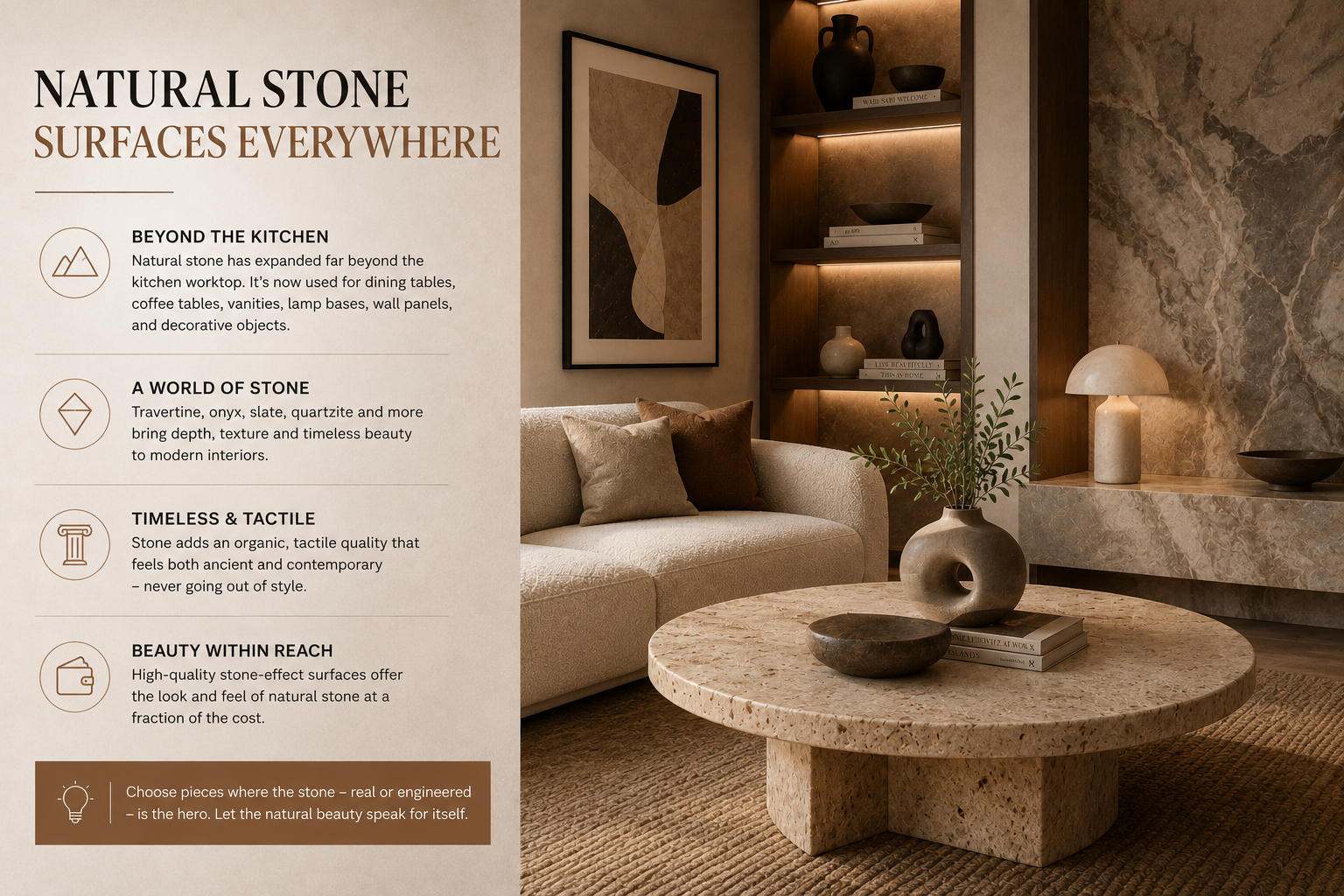
Marble has been a design staple for decades, but 2026 sees natural stone moving far beyond the kitchen worktop. Stone is appearing on dining tables, coffee tables, bathroom vanities, lamp bases, decorative objects, and even wall panels - and the variety of stones being used has expanded well beyond classic white Carrara.
Travertine with its warm, porous surface and soft beige tones is perhaps the stone of the moment. Bouclé-textured plaster walls paired with a travertine coffee table create a layered, tactile quality that feels both ancient and entirely contemporary. Onyx, with its dramatic veining and translucency when backlit, is appearing in high-end kitchens and bathrooms. Even more rugged stones like slate and quartzite are finding their place in modern interiors.
If natural stone feels out of budget, high-quality stone-effect surfaces have improved enormously in recent years and can deliver a similar aesthetic impact at a fraction of the cost. The key is choosing pieces where the stone - real or engineered - is the clear visual focus rather than an afterthought.
Curved and Organic Shapes Replace Sharp Edges
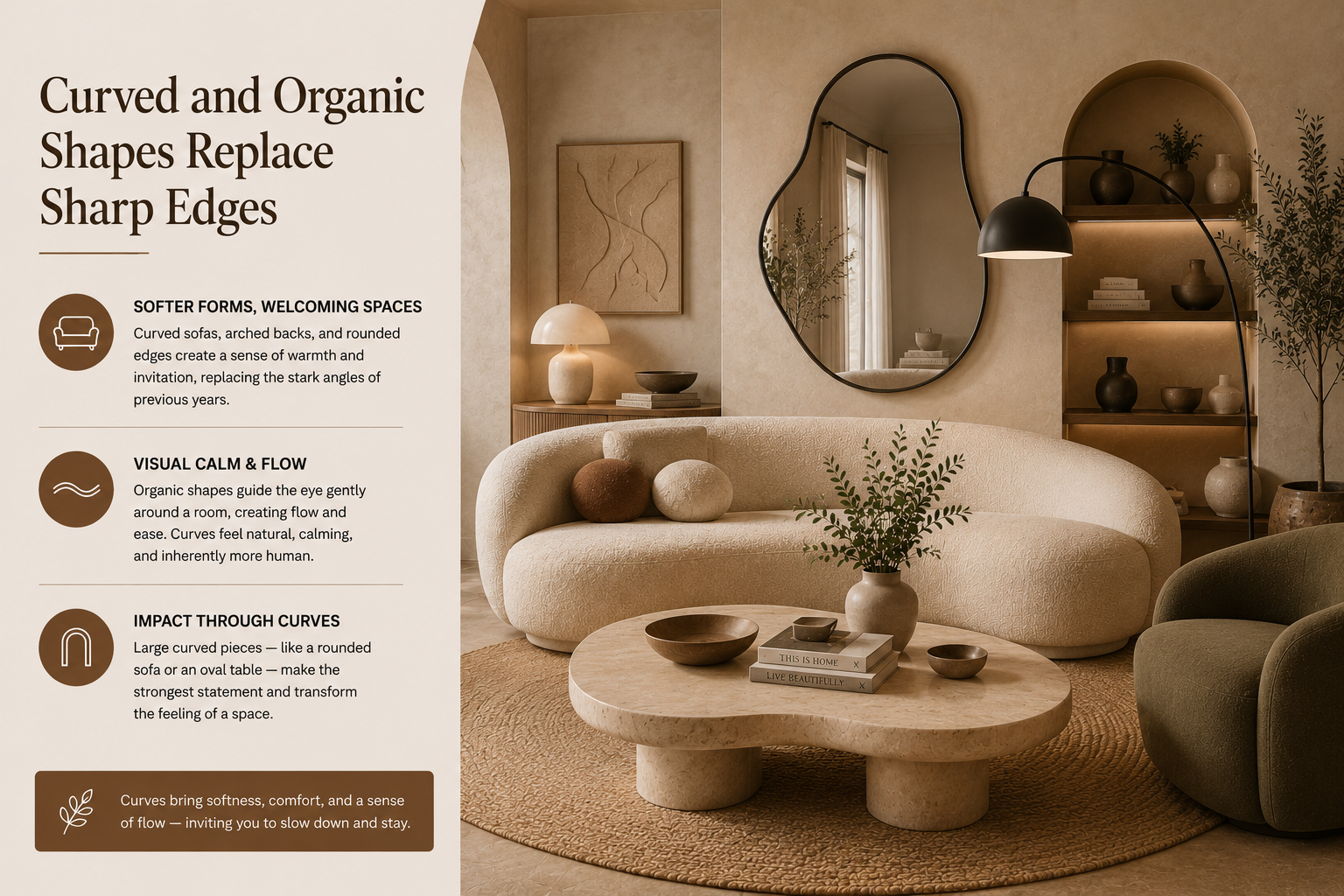
The sharp, angular geometry that dominated interior design for much of the last decade is giving way to something softer and more organic. Curves are everywhere in 2026 - in sofas with rounded arms and arched backs, in mirrors with irregular, organic frames, in tables with oval or kidney-shaped tops, in archways and alcoves built into walls.
There is a psychological dimension to this shift. Curved forms feel inherently more welcoming and calming than sharp angles. They slow the eye down as it moves around a room, creating a sense of ease and flow. In a world that can feel relentlessly fast and angular, interiors with generous curves offer genuine visual and emotional relief.
The most impactful way to introduce curves is through large upholstered pieces. A sofa with a deep, rounded back and wide arms anchors a living room with a sense of softness that no angular sofa can match. Pair it with a curved coffee table and an arched floor lamp, and the room takes on an entirely different feeling - one that invites you to slow down and stay.
Rich, Saturated Colours Return
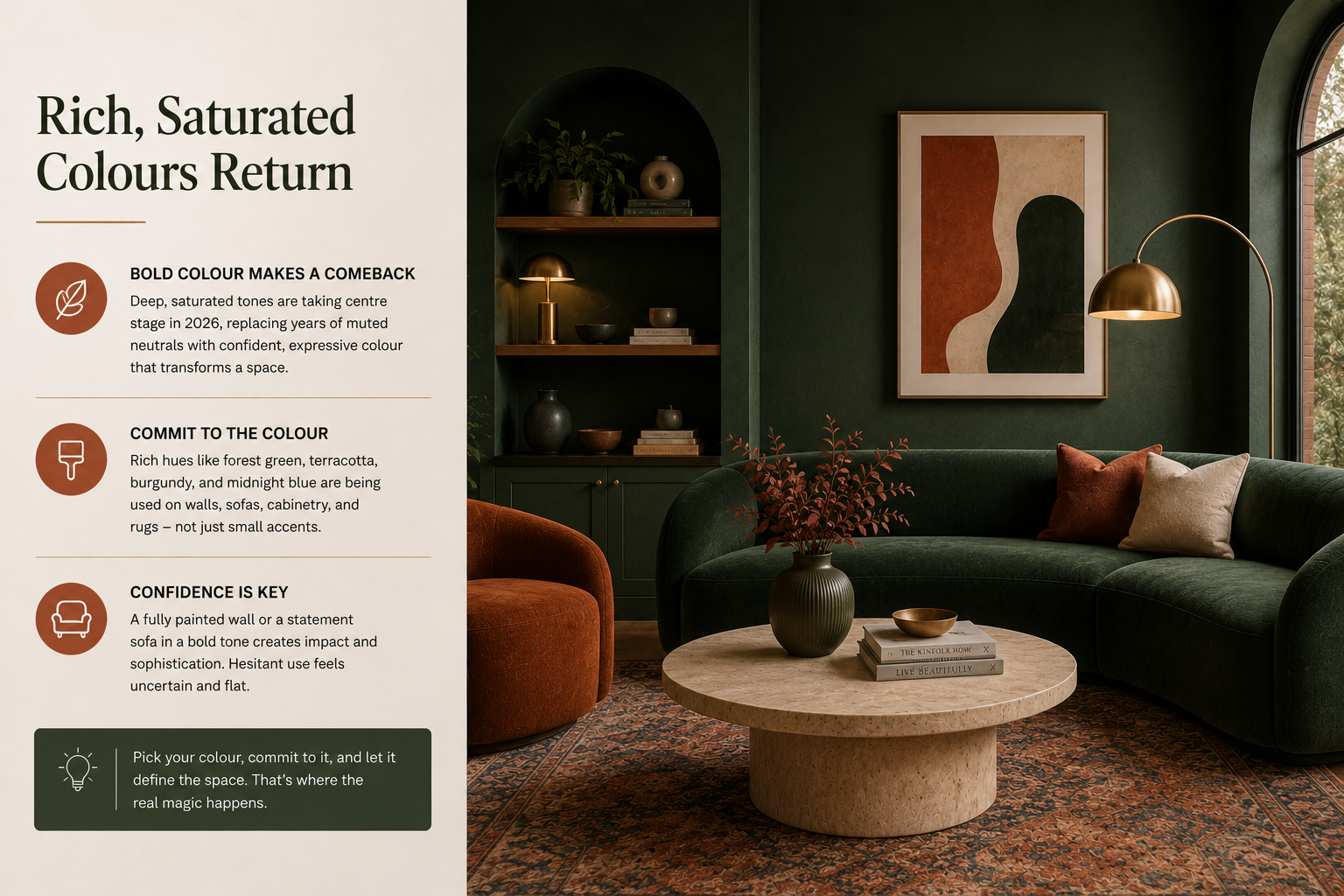
After years of greige, off-white, and muted tones dominating interior palettes, colour is making a bold and confident return in 2026. Not pastel or timid colour - deep, saturated, committed colour that transforms a room and makes a genuine statement.
Forest green is perhaps the colour of the year, appearing on walls, upholstery, cabinetry, and accessories across every category of interior design. Deep terracotta, rich burgundy, midnight blue, and warm burnt orange are all having significant moments. These are not accent colours used sparingly - they are being applied to entire walls, full sofas, and large area rugs with conviction.
The key to working with bold colour is commitment. A single wall painted in a deep forest green with the rest of the room in complementary neutrals reads as decisive and sophisticated. The same green applied tentatively to a small cushion in an otherwise beige room looks uncertain. Pick your colour, commit to it, and let it define the space.
Layered Textiles and Tactile Richness
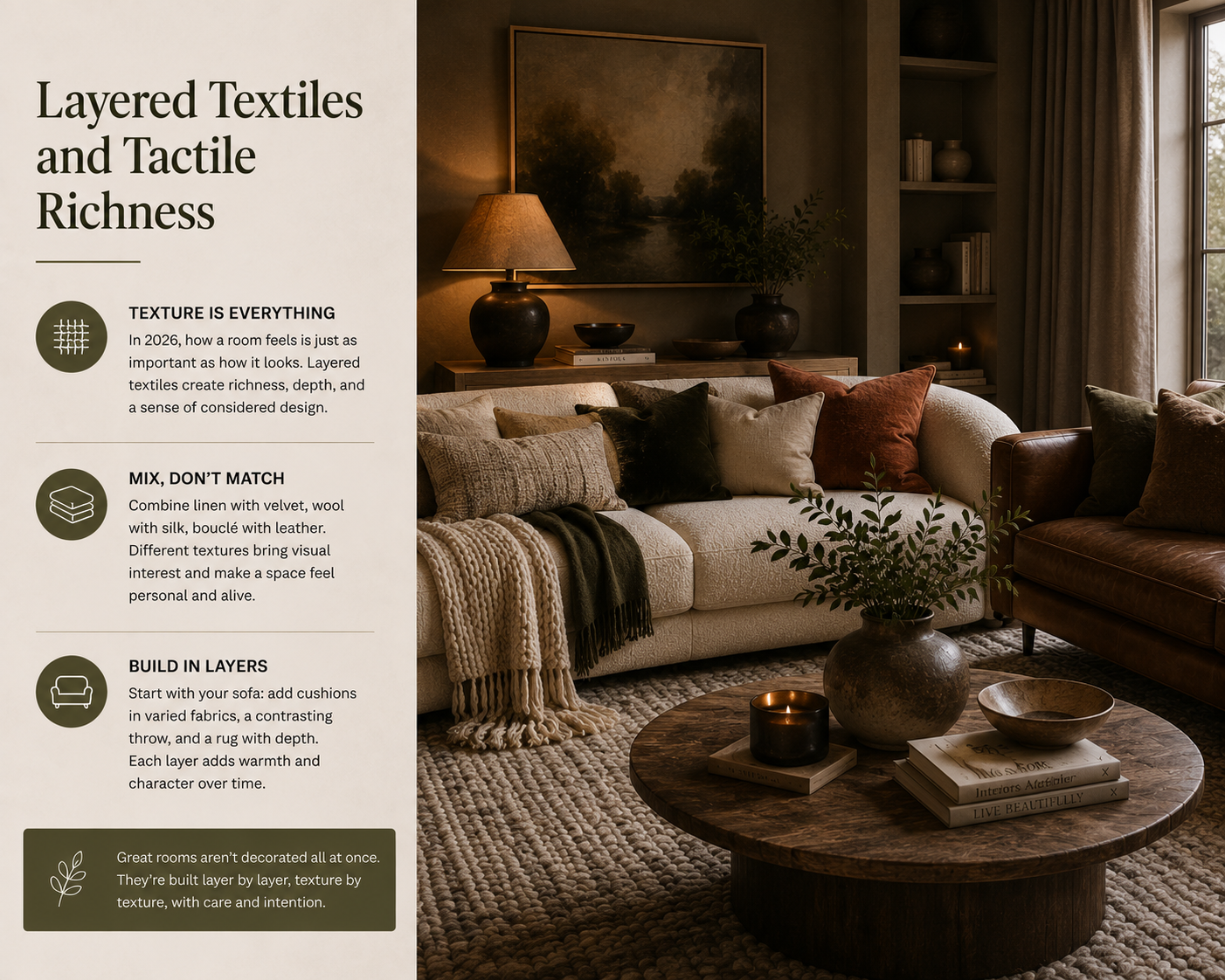
In 2026, how a room feels when you touch it is just as important as how it looks. The trend for layered textiles - mixing different fabrics, textures, and weights to create a sense of richness and depth - has become one of the defining characteristics of beautifully designed interiors.
This means combining linen cushions with velvet throws, pairing a chunky wool rug with silk curtains, mixing a bouclé armchair with a leather sofa. The variety of textures creates a visual complexity that makes a room feel considered and alive - the opposite of a showroom where everything matches perfectly and nothing feels personal.
The practical starting point is your sofa. Layer it with cushions in three or four different fabrics and textures - a linen cover here, a velvet front there, a knitted cushion at the end. Then introduce a throw in a contrasting texture. Add a rug that offers yet another surface quality underfoot. Each layer adds to the sense that the room has been built up over time with care and intention.
Biophilic Design: Bringing the Outside In
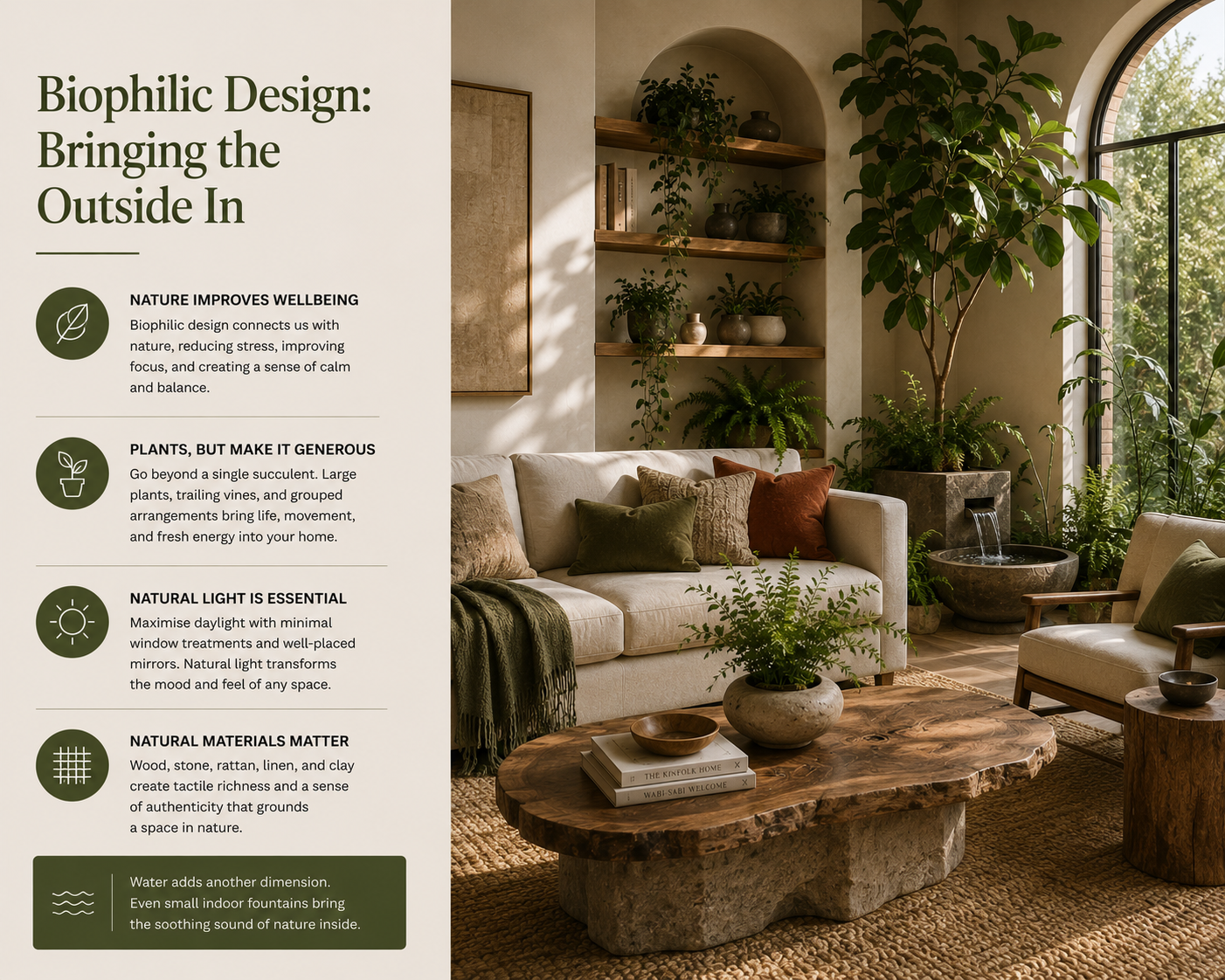
Biophilic design - the practice of integrating natural elements into interior spaces to connect occupants with the natural world - has moved from niche trend to mainstream philosophy in 2026. The evidence for its benefits is compelling: natural elements in interior spaces reduce stress, improve concentration, and create a sense of wellbeing that synthetic materials simply cannot replicate.
At its most straightforward, biophilic design means bringing plants into your home - not a single succulent on a windowsill, but genuinely generous greenery. Large fiddle-leaf figs, trailing pothos, architectural bird-of-paradise plants, and collections of smaller plants grouped together to create the impression of indoor gardens all contribute to this feeling of connection with nature.
Beyond plants, biophilic design encompasses natural light - maximising it through the strategic placement of mirrors and keeping window treatments light and minimal - as well as natural materials like wood, stone, rattan, and linen. Water features, even small indoor fountains, add another dimension through sound. The goal is an interior that feels like a natural extension of the world outside rather than a sealed, artificial environment.
Artisanal and Handmade Objects
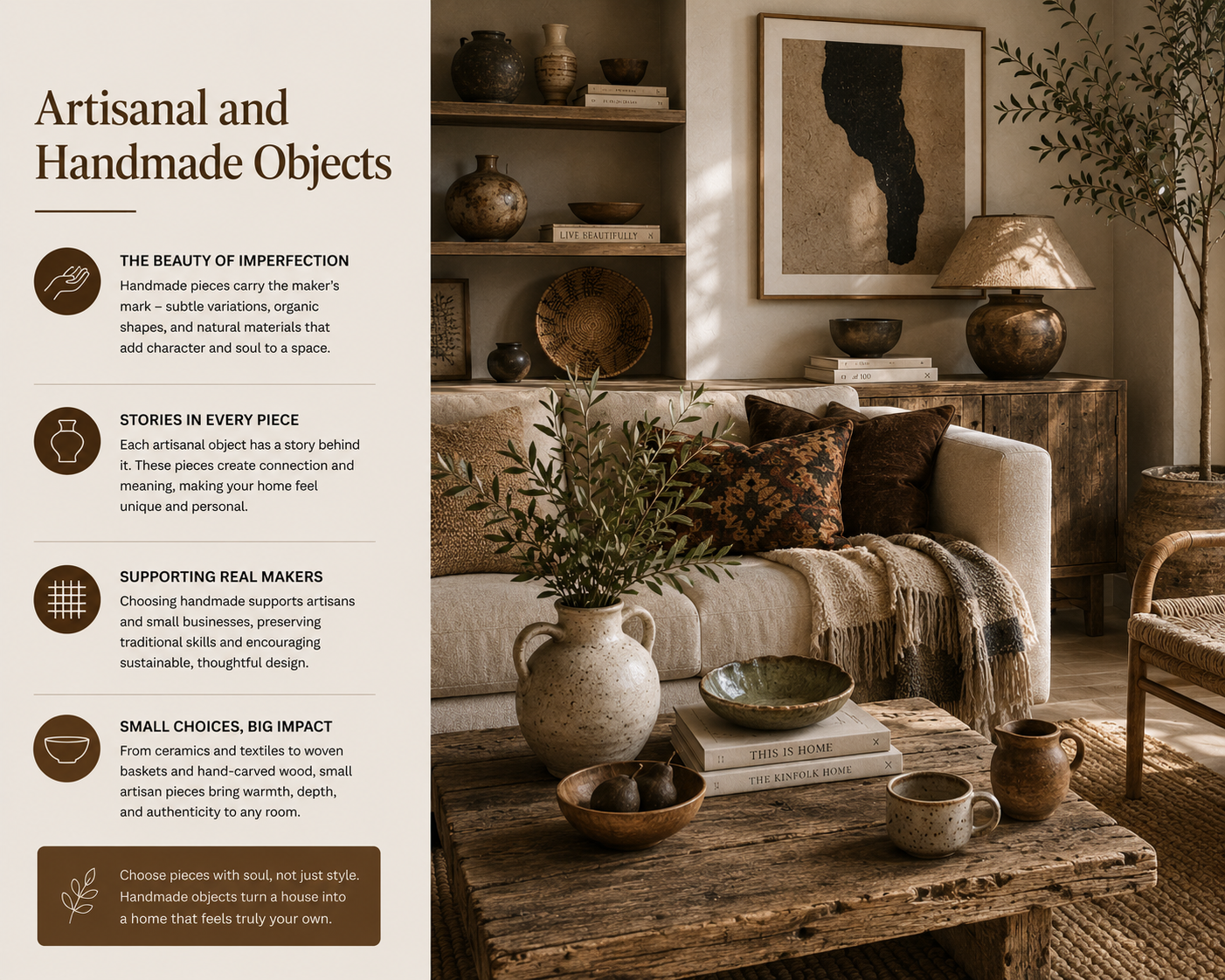
The perfect, machine-made uniformity that characterised much of early 21st-century design is losing its appeal. In its place, there is a growing hunger for objects that show the hand of the maker - ceramics with imperfect glazes, glassware with tiny bubbles, textiles with slight variations in weave, furniture with hand-finished surfaces.
This is partly a reaction to the homogenisation of interiors driven by fast-furniture retail. When everyone can access the same products, the things that make a home feel individual and personal become precious. Handmade and artisanal objects - whether sourced from independent makers, discovered at markets, or brought back from travels - carry a story and a specificity that mass-produced objects simply cannot replicate.
In practical terms, this trend expresses itself most easily through accessories and tableware. A collection of ceramic vases in related but not identical glazes, a hand-thrown bowl used as a fruit dish, a woven basket as a side table - these small choices accumulate into an interior that feels genuinely inhabited and personal rather than styled for a photoshoot.
Multi-Functional Spaces Designed with Intention
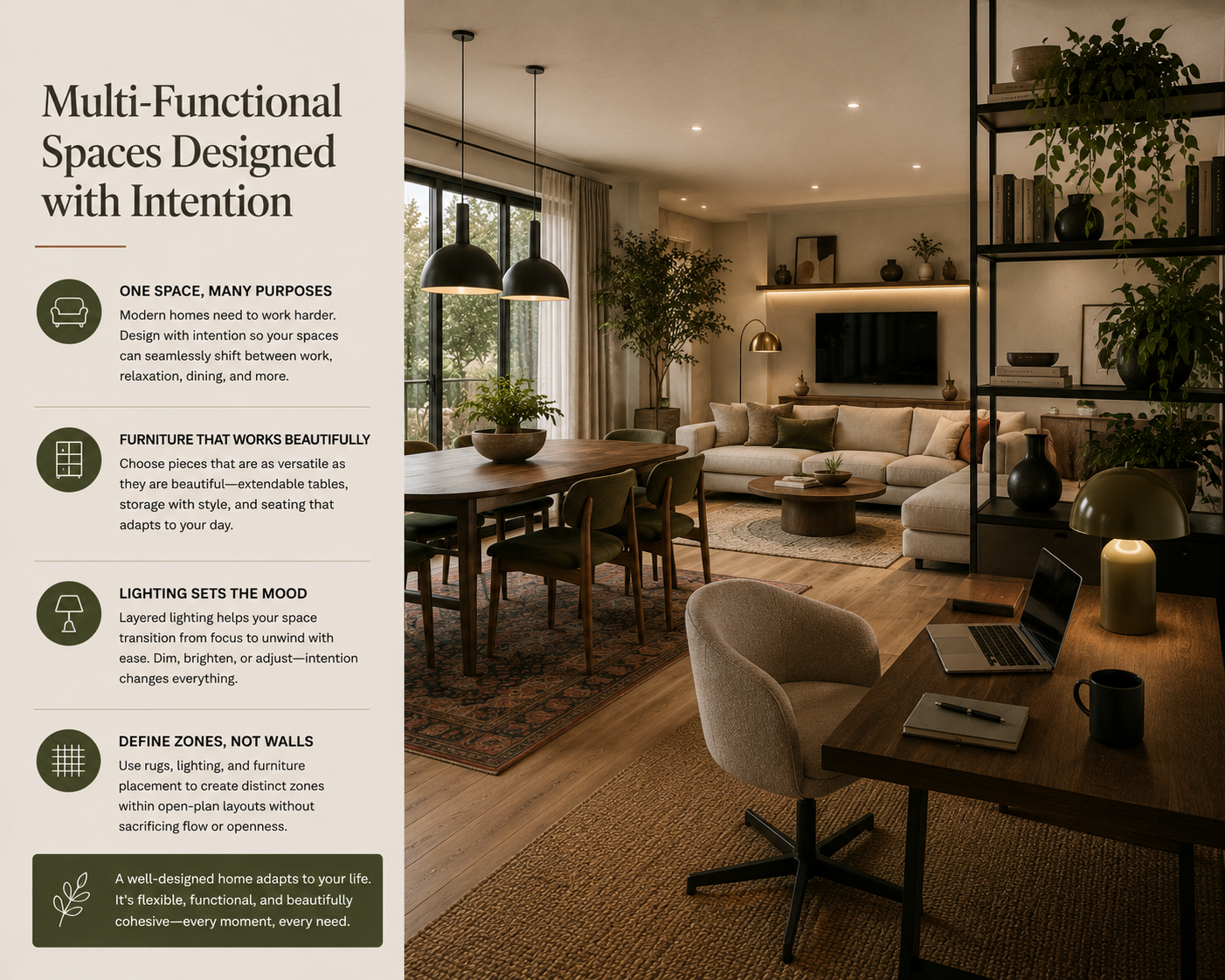
The way we use our homes has changed permanently since the pandemic years, and interior design in 2026 reflects this new reality. Spaces need to serve multiple functions - the dining table is also a workspace; the living room also needs to accommodate exercise, creativity, and relaxation. But in 2026, the best homes are no longer simply cramming multiple functions into a single space - they are designing for that multi-functionality with genuine intention and elegance.
This means furniture that is genuinely beautiful in addition to being versatile - extendable dining tables that look as good closed as open, storage pieces that double as display surfaces, room dividers that also function as shelving or art installation. It means lighting that can be adjusted to shift a space from work mode to relaxation mode. It means thinking carefully about zones within open-plan spaces and defining them through rugs, lighting changes, and furniture arrangement rather than walls.
The result, when done well, is a home that feels both flexible and coherent - a space that serves the full complexity of modern life without ever feeling compromised or provisional.
Statement Ceilings: The Fifth Wall
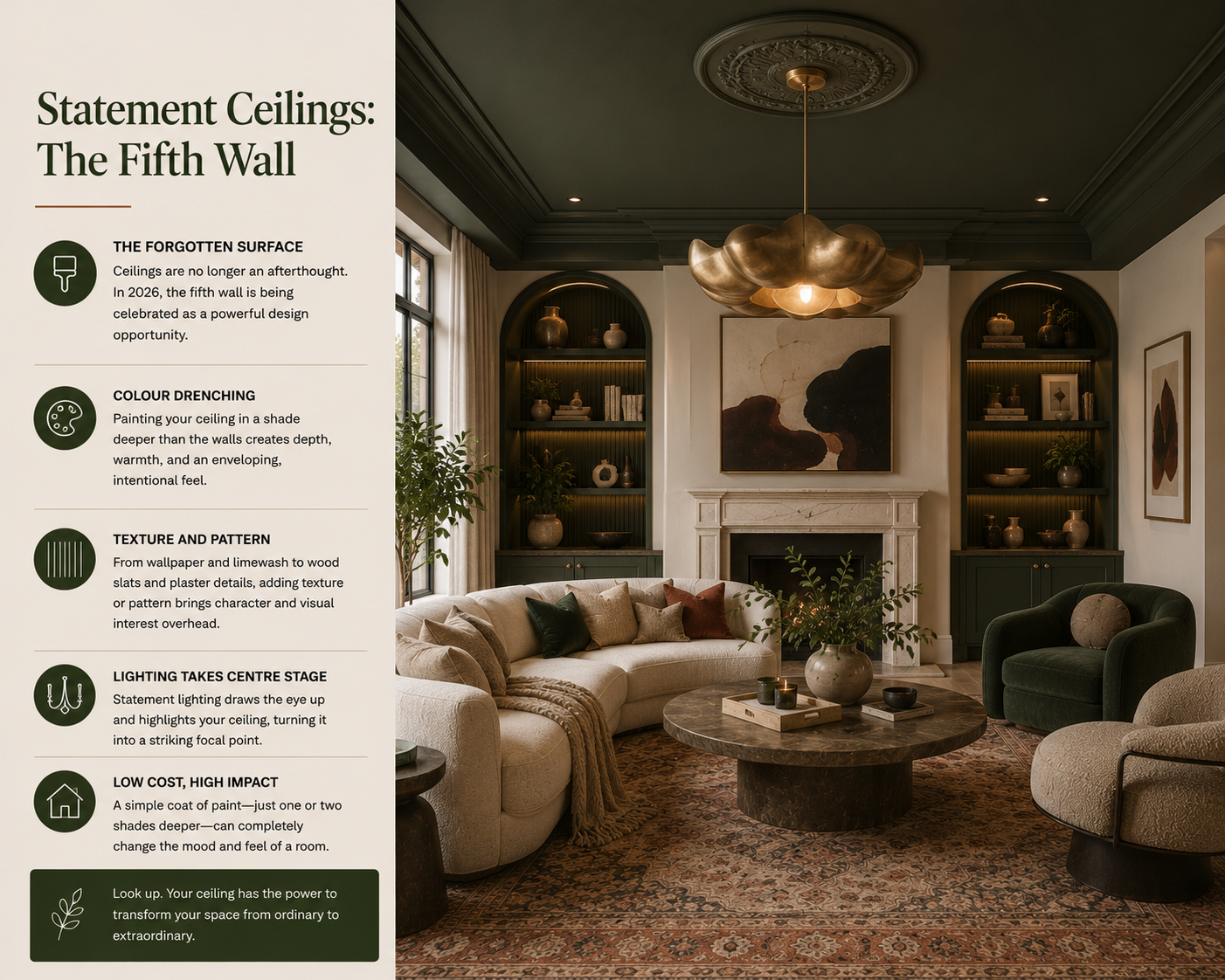
For too long, ceilings have been the most neglected surface in the home - painted white and forgotten. In 2026, that is changing dramatically. The ceiling is increasingly being treated as a design opportunity in its own right - what designers have begun calling the fifth wall.
The approaches range from subtle to dramatic. At the subtler end, painting the ceiling in a colour slightly deeper than the walls - a technique known as colour drenching - creates a cocooning, enveloping quality that makes a room feel more intimate and intentional. More dramatically, ceilings are being decorated with wallpaper, limewash paint in deep tones, wooden slats or panels, plasterwork details, and bold geometric patterns.
Statement lighting plays a crucial role in the fifth-wall trend. A sculptural chandelier or an extraordinary pendant lamp draws the eye upward and transforms the ceiling from dead space into an active part of the room's design. When the ceiling itself has colour, texture, or pattern to offer as well, the effect is genuinely extraordinary.
The easiest starting point is paint. Choose a colour one or two shades deeper than your wall colour, apply it to the ceiling, and watch how completely it changes the character of the room. It is one of the lowest-cost, highest-impact changes you can make to an interior - and in 2026, it is the design move that separates the truly considered homes from everything else.
How to Apply These Trends Without Losing Your Personal Style
Trends are useful as inspiration and orientation - they tell you what is possible and what the design conversation looks like right now. But the best interiors are never simply trend-led. They are personal. They reflect the specific tastes, experiences, and lives of the people who live in them.
The most effective way to use these 2026 trends is to filter them through your own aesthetic instincts. Which of these trends genuinely excites you? Which feels like an authentic extension of how you already live and what you already love? Start there, with one trend that feels right, and explore how it might express itself in your specific home.
You do not need to implement every trend simultaneously. One deeply considered change - a new sculptural pendant lamp, a wall painted in a rich saturated colour, a collection of artisanal ceramics on a shelf - can transform the feeling of a room entirely. Do it well, do it with conviction, and your home will feel more alive for it.
Final Thoughts
2026 is an extraordinary time to invest in your home. The design world is producing objects of genuine beauty and craft - sculptural furniture, handmade ceramics, extraordinary lighting, natural materials worked with skill and sensitivity. The trends defining this moment are not arbitrary; they reflect a deeper shift in how we want to live: with more warmth, more character, more connection to the natural world, and more authentic expression of who we are.
Explore our full collection of designer furniture, lighting, and home décor at Dezignlover - every piece is chosen to help you build an interior that is not just beautiful, but genuinely yours.

© 2012 - 2026 Dezignlover. All Rights Reserved.